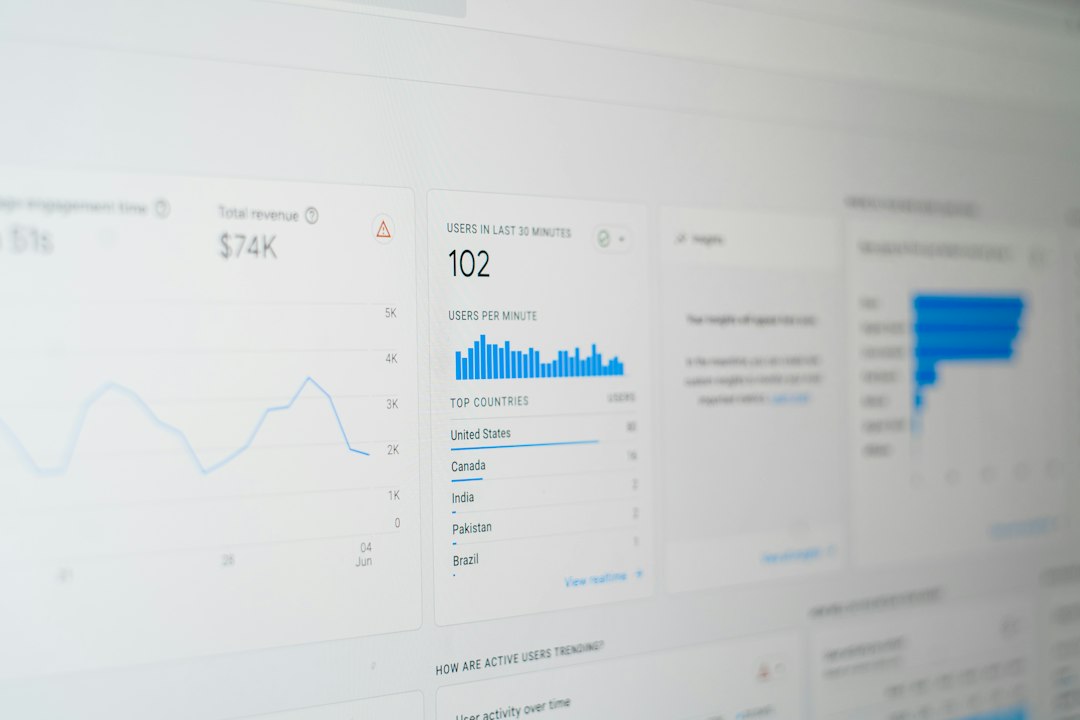
Real-time analytics dashboards feel like the future. You refresh, numbers update instantly, and you watch visitors flow through your site like water through a pipe. But after running content businesses for years, I’ve stopped using them—and the operators I respect most have done the same.
The thesis is simple: real-time analytics create more anxiety than insight for solo operators, and the decisions that actually move your business don’t require sub-minute data refresh cycles.
Real-time data answers questions you shouldn’t be asking
When you can see live visitor counts, you start checking obsessively. A post goes out, you refresh every two minutes to see who clicked. Traffic drops at 2pm, you wonder if something broke. A spike appears, you hunt for the source before it even registers as statistically meaningful.
None of this changes what you do next. You’re not running a newsroom with breaking stories or a SaaS product where downtime costs thousands per minute. You’re writing, publishing, and building an audience over weeks and months. The question “how many people are on my site right now” has no useful answer for that work.
Compare that to page-refresh analytics—the kind where you load a report, see yesterday’s or last week’s data, and close the tab. You check once a day, maybe twice. You look for patterns across days, not fluctuations across minutes. The data is old enough that you’ve already moved on to the next piece of work, so you’re not tempted to react to noise.
Decision latency matters more than data latency
The best operators I know make big changes slowly. They publish consistently for a month, then look at aggregate traffic. They run a campaign, wait a week, and review conversions. They don’t pivot based on an hour of data because an hour teaches you almost nothing.
Real-time dashboards seduce you into thinking fast data enables fast decisions. It doesn’t. It just makes you refresh more often and second-guess choices that need time to prove out.
Here’s the test: name the last time real-time data changed what you did that day. Not what you worried about—what you actually changed. For most solo operators, the answer is never, or close to it.
What page-refresh analytics look like in practice
I use Google Analytics 4, but I’ve turned off all real-time reports. I check the dashboard once in the morning, usually while coffee brews. I look at the prior day’s traffic, top pages, and referral sources. That’s it. The data is 12 to 36 hours old, and that’s exactly the latency I want.
When I’m testing something new—a headline format, a topic cluster, a traffic source—I set a calendar reminder to check results in seven days. Not tomorrow. Not in an hour. A week. That’s the minimum window where patterns separate from randomness for a site getting a few hundred visits a day.
For conversion tracking, I use the same rhythm. I look at email signups, affiliate clicks, and product sales once a week. I export the numbers into a spreadsheet, compare them to the prior week, and only act if I see a trend across three weeks or more.
This isn’t laziness. It’s discipline. Real-time data makes you react to everything. Time-delayed data forces you to react to things that matter.
When real-time actually matters
There are exceptions. If you’re running a live launch—a webinar, a cart-open window, a time-sensitive campaign—real-time data helps you catch technical failures fast. A broken payment link, a redirect loop, a missing email confirmation. Those need immediate fixes, and real-time dashboards catch them.
But even then, you’re not watching the dashboard continuously. You’re checking it at planned intervals: right after the email sends, an hour later, then at the end of the day. You’re still batching your attention, not streaming it.
For day-to-day operations—publishing posts, growing an email list, optimizing evergreen content—real-time data is a distraction dressed up as a feature.
How to turn off real-time (or just stop looking)
Most analytics platforms default to real-time views because they look impressive in demos. Google Analytics 4 has a “Realtime” report in the left nav. Plausible and Fathom show live visitor counts on the homepage. You don’t have to use them.
In GA4, bookmark the “Reports > Traffic acquisition” page instead of the overview. In Plausible, go straight to the “Top pages” view. In Fathom, click through to “Top sources” first thing. Make the stale, batched data your default landing page, and you’ll stop checking the live feed by accident.
If you’re using a custom dashboard or a tool that forces real-time views, set a recurring calendar block once a day labeled “check analytics.” Train yourself to only open the tab during that window. The rest of the day, the dashboard doesn’t exist.
You’ll feel anxious the first week. You’ll wonder if you’re missing something important. You’re not. You’re just breaking the refresh addiction, and on the other side is calmer, better decision-making.
Want more like this? Subscribe to One Two Three Send for weekly tactics on running a calmer, more profitable online business—no real-time dashboard required.