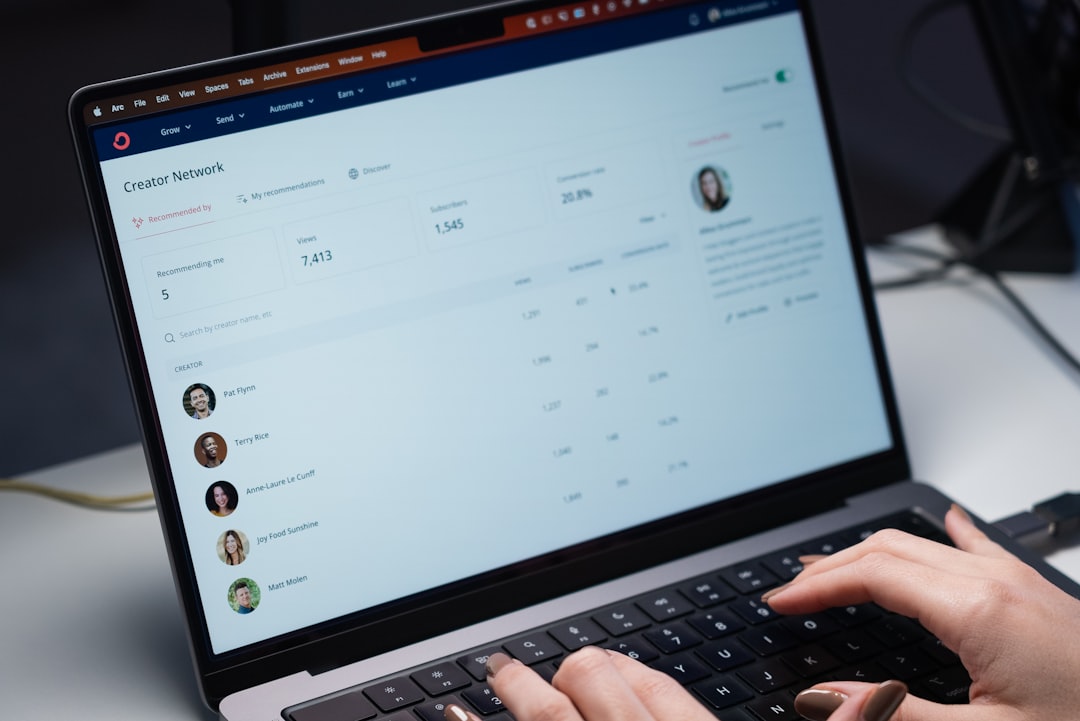
ConvertKit’s broadcast scheduler includes a checkbox labelled “Optimise send time.” When enabled, the platform doesn’t deliver your email at the moment you hit publish—it queues each subscriber’s copy for a window it thinks they’re most likely to engage.
The feature sounds useful. In practice, it works well for some operators and creates confusion for others. Here’s what actually happens under the hood, when the algorithm helps, and when you’re better off choosing a fixed send time.
What the algorithm looks at
ConvertKit’s send-time optimisation scans each subscriber’s engagement history: opens, clicks, and the timestamps associated with both. It looks for patterns—does this person consistently open emails around 7 a.m. Eastern? Do they engage more on weekday mornings or weekend afternoons?
If the platform identifies a statistically significant pattern, it schedules delivery within a window it predicts will perform better than a one-size-fits-all broadcast time. If no pattern exists—new subscribers, inactive readers, or those with erratic habits—it defaults to your account’s standard send time or the time you manually set when creating the broadcast.
The optimisation window spans roughly 24 hours. ConvertKit won’t hold a broadcast for days, but it will stagger delivery across morning, afternoon, and evening slots depending on subscriber behaviour.
When it helps
Send-time optimisation works best when you have a large, engaged list with diverse time zones and consumption habits. If you’re sending to 10,000 subscribers spread across North America, Europe, and Asia, the feature can lift open rates by 2–8% compared to a single fixed time.
It’s also useful when your content isn’t time-sensitive. Evergreen tutorials, weekly roundups, and educational sequences don’t lose value if they arrive six hours later than your publish click. The algorithm prioritises engagement over synchronicity.
Operators who publish frequently—three or more broadcasts per week—also see better results. The platform accumulates more engagement data, which sharpens its predictions. If you send once a month, there’s less signal to work with.
When manual scheduling wins
Time-sensitive broadcasts break the optimisation logic. If you’re announcing a product launch, a limited-time discount, or commentary tied to a news event, you want simultaneous delivery. Staggering emails across 24 hours means some subscribers see the offer after it’s expired or the news cycle has moved on.
Small lists—under 1,000 subscribers—don’t benefit much either. The algorithm needs volume to identify statistically meaningful patterns. With a few hundred people, manual scheduling based on your own audience knowledge often outperforms the automated approach.
And if your list skews heavily toward a single time zone or demographic, the optimisation adds complexity without much upside. A newsletter serving U.S. East Coast professionals during weekday work hours doesn’t need personalised delivery windows—everyone’s already in the same behaviour bucket.
One non-obvious tip
ConvertKit’s send-time optimisation relies on opens as its primary engagement signal, but open tracking has degraded since Apple’s Mail Privacy Protection rolled out in 2021. A meaningful percentage of your subscribers now register artificial opens the moment an email hits their inbox, regardless of when they actually read it.
This skews the algorithm’s predictions. If you notice erratic or counterintuitive delivery patterns—emails going out at odd hours, open rates drifting downward despite optimisation being enabled—try disabling the feature for two or three broadcasts and compare performance. Manual scheduling at a consistent, tested time often performs better when open-tracking reliability is compromised.
You can also cross-reference your ConvertKit open data with click data, which remains accurate. If the platform says a subscriber opens at 6 a.m. but consistently clicks at noon, the optimisation may be misfiring. In that case, fall back to manual control.
Want more breakdowns like this? Subscribe to One Two Three Send for weekly deep-dives on the tools and tactics that actually move the needle for solo operators.