Link cloaking breaks silently when redirect rules change
The morning coffee tastes different when you realise twelve affiliate links stopped working three days ago and nobody told you. No error email, no dashboard warning—just revenue that didn’t arrive.
Link cloaking breaks silently when platforms change redirect rules
Affiliate operators rely on redirect plugins and short-link services that stop working the moment a platform updates its policies.
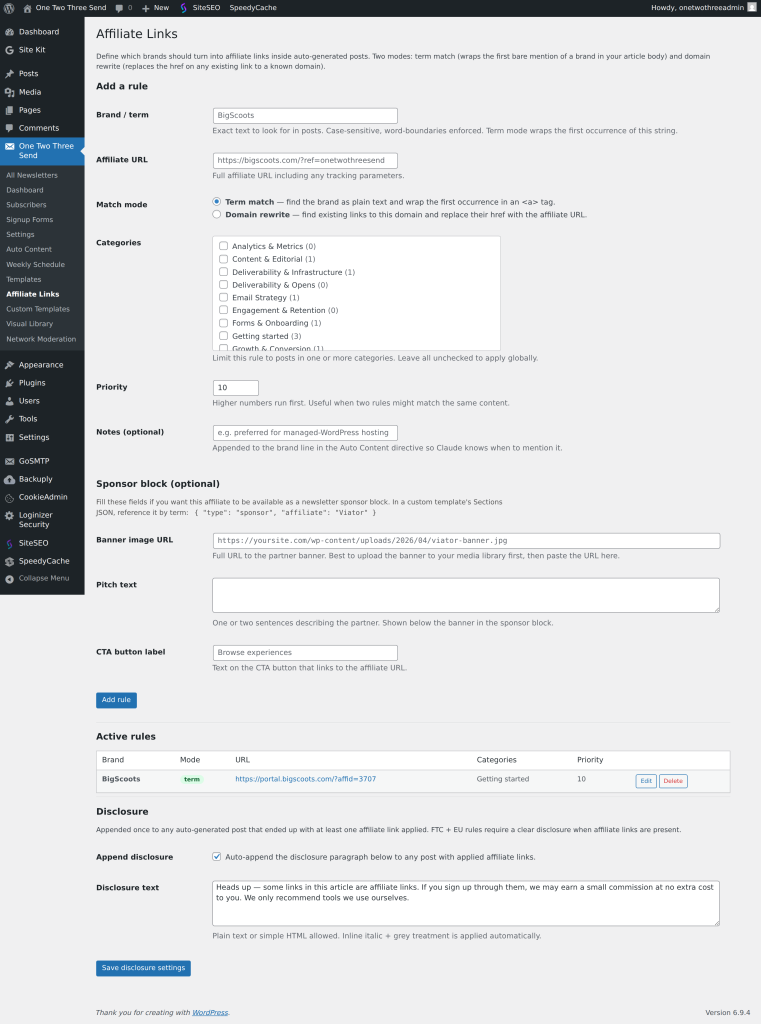
Most newsletter operators cloak affiliate links to clean up URLs, track clicks, or swap destinations without editing old posts. The plugin or service sits between your reader and the merchant, logging the click and passing it through. It works until it doesn’t—and when redirect policies change, you find out weeks later when commission reports come in light.
WordPress redirect plugins rewrite links at render time or via .htaccess. Link-shortening services like Bitly, Rebrandly, or Pretty Links rely on HTTP 301 or 302 status codes. Platforms—email clients, social networks, even browsers—periodically tighten rules around redirects to combat phishing and malware. When Gmail or Twitter decides to block intermediate hops, your cloaked link returns a warning page instead of sending the reader to checkout. No error reaches your inbox. The click simply dies.
The fix is monitoring, not hope. Log every cloaked link’s HTTP response weekly, check affiliate dashboards for sudden drop-offs in attributed clicks, and test your most-used links in private browser windows across Gmail, Outlook, and mobile clients. When response codes change or platforms flag your domain, switch strategies before the next campaign: use direct affiliate URLs with UTM parameters for attribution, or move to a dedicated link-management domain that isn’t shared across thousands of users.
TACTIC
Affiliate link injection plugins rewrite your HTML three different ways
Before you rely on a plugin to auto-insert affiliate links, understand what it’s doing to your markup. Some parse the DOM and wrap keywords in anchors; others run regex on raw HTML; a few inject JavaScript that rewrites the page client-side. Each method has different performance costs, different caching behaviour, and different failure modes when your CDN or object cache steps in. If your plugin rewrites on every page load instead of at publish time, you’re burning server cycles and introducing a single point of failure for every affiliate conversion.
WORTH READING
Payment processor reserved balances: when Stripe holds 20% of revenue
Affiliate commissions arrive in batches, but Stripe and PayPal don’t always release them immediately. Reserved balances—holding a percentage of incoming payments for seven to ninety days—trigger when transaction volume spikes, when chargebacks climb, or when your account is flagged for review. If you’re scaling affiliate or sponsorship revenue quickly, a reserve can freeze thousands of dollars with no advance notice. The article walks through when reserves trigger, how long they last, and what documentation speeds up release.
FROM THE ARCHIVE
Traffic attribution breaks when visitors block referrer headers
You’re tracking affiliate link clicks in Google Analytics or Plausible, but privacy-focused browsers and browser extensions strip referrer headers before the request reaches your server. That means you lose the data that tells you which social post, email campaign, or blog mention drove the click. Attribution reports show “direct” or “unknown” traffic instead of the true source, and you can’t accurately calculate ROI on the channels that actually convert. The piece explains what gets blocked, which tools are affected, and how to adjust your tracking setup to recover lost attribution.
Know someone who would like this? Forward today’s email—every operator we reach is one closer to running an online business with a little less friction.