Author: onetwothreeadmin

  • How much money does your newsletter lose in spam?

    How much money does your newsletter lose in spam?

    You check your dashboard. Open rate looks fine. Click rate is steady. Unsubscribes are low. Everything seems healthy.

    Meanwhile, 11% of your list never sees your newsletter. Not because they don’t want it—they signed up, after all—but because it’s landing in spam. And because spam is invisible, you’re flying blind on the actual cost.

    Let’s fix that.

    The revenue you can’t see

    Spam folder placement isn’t a binary technical failure. It’s a gradient tax on every send. A 5% spam rate sounds negligible until you multiply it by subscriber lifetime value, send frequency, and conversion rate.

    Here’s the maths most operators skip: if you’re sending to 10,000 subscribers twice a week, and 8% land in spam, that’s 1,600 impressions per week that generate zero opens, zero clicks, and zero revenue. Over a year, that’s 83,200 completely wasted sends.

    If your newsletter drives $2 in monthly value per engaged subscriber—through affiliate commissions, product sales, or client leads—that 8% spam rate is costing you roughly $16,000 annually. And that’s conservative.

    The problem isn’t just lost revenue. It’s that spam folder subscribers still count against your billing tier, your engagement benchmarks, and your sender reputation. You’re paying to send to ghosts.

    Why spam rates hide in plain sight

    Most platforms report deliverability as a boolean: delivered or bounced. But “delivered” just means the receiving server accepted the message. It doesn’t tell you where it went after that.

    Inbox placement—the percentage that actually reaches the primary folder—requires separate tooling. Seed list testing, postmaster data, and third-party monitors like 250ok or GlockApps can surface the truth, but they cost money and require regular audits.

    So most operators don’t look. They assume their 40% open rate means 40% of their list is seeing the newsletter. In reality, if 10% is in spam, the true engaged denominator is smaller—and your real open rate among inbox recipients might be 44%. Better, but you’re still leaving 10% on the table.

    The fix isn’t what you think

    Authentication—SPF, DKIM, DMARC—is table stakes now, not a fix. If you’re still missing any of those three, you’re not just risking spam placement; you’re risking full rejection at major providers.

    The levers that actually move inbox placement are behavioural, not technical:

    • Engagement velocity: Gmail and Outlook track how quickly recipients open, delete, or ignore your mail. A slow burn-off in engagement signals declining relevance, which degrades placement over time.
    • Complaint rate: Even a 0.1% spam complaint rate is high. If you’re above 0.08%, you’re in the danger zone. Every “mark as spam” click is a vote against your sender reputation.
    • List hygiene cadence: Suppressing unengaged subscribers isn’t just about open rates—it’s about protecting your reputation with mailbox providers who watch how many of your recipients ignore you consistently.

    Most importantly: spam placement isn’t evenly distributed. One provider might love you while another bins 30% of your sends. Yahoo, Microsoft, and Google all use different filters, and what works for one won’t necessarily work for another.

    What to do Monday morning

    Start by measuring what you can’t see. Set up a seed list test with addresses at Gmail, Outlook, Yahoo, and Apple. Send your next newsletter and manually check placement. If more than 2–3% land in spam or promotions tabs, you’ve got a problem worth solving.

    Next, pull a report of subscribers who haven’t opened in 90 days. Segment them into a re-engagement campaign—one or two last attempts—then suppress anyone who still doesn’t bite. Yes, your list size shrinks. Your inbox placement improves, and so does your revenue per send.

    Finally, monitor your complaint rate monthly. If it’s ticking up, your content, frequency, or expectations are misaligned with what subscribers actually want. Fix the editorial problem, not just the technical one.

    If this resonated, reply and tell us what your spam rate actually is—if you know it. We read every response, and the stories often turn into future articles.

    Spam folder revenue loss isn’t a catastrophic failure. It’s a quiet leak. But quiet leaks sink ships just as surely as loud ones.
  • The newsletter template that’s making readers work too hard

    The newsletter template that’s making readers work too hard

    You’ve spent hours on your subject line. Your preview text is crisp. The open happens. Then your reader arrives in their inbox and immediately has to work.

    They’re pinching to zoom on mobile. They’re hunting for the actual content among a sea of social icons, navigation menus, and decorative whitespace. They’re squinting at 12px grey text on a white background. And most of the time, they just close it.

    Your template isn’t helping you. It’s creating friction between the open and the read.

    The invisible tax of template complexity

    Most newsletter platforms offer templates that look impressive in the preview. Multi-column layouts, hero images, carefully branded headers, elaborate footers with every possible link. They look like websites, because that’s what we’ve been conditioned to think “professional” means.

    But newsletters aren’t websites. Your reader isn’t browsing. They’re not exploring navigation. They opened an email because you promised them something specific, and now they want to know if you’re going to deliver.

    Every visual element that isn’t your core message is a small cognitive tax. A logo they don’t need to see again. A navigation menu that goes nowhere useful. A three-column layout that collapses awkwardly on mobile. Each one whispers: “This might not be worth your time.”

    The operators who retain readers aren’t the ones with the fanciest templates. They’re the ones who’ve ruthlessly eliminated everything that isn’t the message.

    What actual readability looks like

    Readability isn’t about dumbing things down. It’s about reducing the gap between intent and comprehension. When someone opens your newsletter, how quickly can they start reading?

    Line length matters more than you think. The ideal measure for comfortable reading is 50–75 characters per line. Most newsletter templates blow past 100 characters on desktop, forcing the eye to work harder to track from line to line. On mobile, the opposite happens—templates with too much padding create awkwardly short lines that feel choppy.

    Font size is where most templates fail hardest. Fourteen pixels is the minimum for body text, but 16–18px is where readability actually starts. If your reader has to zoom, you’ve already lost momentum.

    Contrast isn’t negotiable. Grey text (#666, #888, even #999) has become a design trend that actively punishes readers. True black on white can feel stark in a brand guide, but in an inbox it’s a gift. Your reader’s eyes are already tired.

    Whitespace is valuable, but only when it’s functional. A massive header graphic might look premium, but if it pushes your opening paragraph below the fold on mobile, it’s working against you. The first thing a reader should see after opening is the beginning of what you promised them.

    The mobile-first reality you can’t ignore

    Somewhere between 40–80% of your readers are opening on mobile, depending on your audience. But most newsletter templates are still designed desktop-first and then “made responsive” as an afterthought.

    This shows up in predictable ways. Multi-column layouts that stack clumsily. Buttons that become impossible to tap because they’re too close together. Images that blow out to full width and dominate the screen. Text that reflows in unexpected ways, breaking your carefully considered rhythm.

    The solution isn’t a separate mobile template. It’s designing for mobile as the primary experience and letting desktop be the easy case. Single column. Generous touch targets. Font sizes that don’t need adjustment. Images sized to support the text, not overwhelm it.

    Test your template by forwarding it to yourself and opening it on your phone. Don’t just glance at it—actually try to read it while standing in a queue or sitting on the bus. If you find yourself pinching, scrolling past large blocks of non-content, or losing your place, your readers are experiencing the same thing every time you send.

    Strip it back, then add only what earns its place

    The best newsletter template is the one your readers don’t notice. They should arrive, start reading, and forget they’re in an email at all.

    Start with plain text in your head. What would you write if formatting wasn’t an option? That’s your foundation. Then add HTML styling only where it genuinely improves clarity. Subheadings that create logical breaks. Emphasis on key phrases. Links that are obviously clickable. Nothing else is mandatory.

    Your logo doesn’t need to be 600 pixels wide. Your footer doesn’t need twelve links. Your social icons don’t need to be above the fold. The unsubscribe link is legally required, but it doesn’t need a decorative border.

    Every element should answer a single question: does this make it easier for the reader to absorb what I’m saying? If the answer is no, or even “maybe,” cut it.

    If this resonated, reply and tell me what you’ve cut from your template. I read every response, and the best ones shape what we cover next in One Two Three Send.

    The newsletters that people actually finish reading aren’t the ones with the best design systems. They’re the ones that get out of their own way.

  • Your unengaged subscribers are worth more than you think

    Your unengaged subscribers are worth more than you think

    There’s a moment in every newsletter operator’s life when they stare at their dashboard and see it: 40% of subscribers haven’t opened in six months. The advice is unanimous—scrub them. Purge the dead weight. Protect your deliverability.

    But here’s what nobody tells you: those silent subscribers might be the most honest signal you have about what’s working and what isn’t.

    The problem with the purge-everything doctrine

    Yes, unengaged subscribers can hurt deliverability. Mailbox providers notice when large chunks of your list ignore you. That’s real, and it matters.

    But the standard advice—delete anyone who hasn’t opened in 90 or 180 days—treats your list like a leaking bucket. Patch the hole, move on. What it misses is that why someone goes quiet tells you more than whether they’ve gone quiet.

    Did they sign up during a product launch and only care about that one topic? Are they opening on a device that doesn’t load images, so they look inactive but aren’t? Did your editorial direction shift and leave them behind? Did they get promoted and lose the problem your newsletter solves?

    When you delete without diagnosing, you lose the signal. You can’t fix what you can’t see.

    What dormancy actually measures

    Unengaged subscribers are a lagging indicator of four things, and only one of them is about the subscriber:

    Topic drift. When engagement drops across a cohort that joined around the same time, it often means your content evolved away from what you promised when they subscribed. They’re not broken—your contract with them is.

    Frequency mismatch. Someone who loved your monthly recap but goes dark when you shift to twice a week isn’t unengaged. They’re over-contacted. The absence is feedback.

    Life-cycle transition. B2B newsletters especially suffer from this. Your reader changed jobs, got promoted out of the weeds, or sold their company. They’re not ignoring you—they’ve graduated. That’s not a failure. It’s entropy.

    Technical invisibility. Image-blocking, corporate firewall stripping, privacy features in Apple Mail—plenty of people read without triggering an open. Treating them as dead just because they’re invisible is bad arithmetic.

    A better framework than delete-or-keep

    Instead of a blanket purge, try a diagnostic segmentation. Create three buckets:

    The recently quiet: 90–180 days of silence. These people are worth a targeted win-back. One well-written re-engagement email that acknowledges the silence and asks a question often pulls 15–25% back into activity. If they don’t bite, then consider removal.

    The long dormant: 180+ days, no engagement at all. Segment these separately and send at lower frequency or not at all—but keep them on the list in a suppressed state. They don’t hurt you if you’re not mailing them, and they’re available for future segmentation experiments.

    The device-invisibles: No recorded opens but they’re still subscribed after a year-plus. Some of these people are reading every word in text-only clients or plain-text mode. Try a single plain-text email asking, “Still reading?” You’ll be surprised how many reply.

    When a purge actually makes sense

    There is a time to delete: when you’re seeing sustained deliverability problems—consistent spam-folder placement, rising bounce rates, or throttling from major providers—and you’ve ruled out authentication, content, and infrastructure issues.

    At that point, yes: cut the long-dormant segment and watch your metrics for two weeks. If open rates climb and inbox placement improves, the purge worked. If nothing changes, the problem wasn’t your unengaged subscribers. It was something else, and you just deleted potential future readers for no reason.

    Before you do any of this, make sure your sending infrastructure is sound and your domain reputation is healthy. If you’re just getting started and need reliable performance from the ground up, BigScoots handles email hosting with proper DNS setup and none of the throttling headaches that come with oversold shared environments.

    Your list is a dataset, not a scoreboard

    Engagement rate feels like a performance review. High is good, low is bad. But your newsletter isn’t a test you pass or fail. It’s a communication system, and unengaged subscribers are system feedback.

    If 40% of your list has gone quiet in the last year, don’t just delete them and celebrate a tidier metric. Ask what changed. Did you? Did they? Did the world?

    The answers will tell you more about where to take your newsletter than any engagement score ever will.

    If this resonated, reply and tell me what percentage of your list is dormant right now—and whether you’ve ever actually tried to win them back. I read every response.

    Some links in this post are affiliate links — we earn a small commission if you sign up through them, at no cost to you. We only recommend tools we actually use.

  • Your newsletter’s ‘from’ name is doing more work than your subject line

    Your newsletter’s ‘from’ name is doing more work than your subject line

    You’ve spent twenty minutes testing subject lines. You’ve A/B tested emojis, punctuation, and whether to capitalise every word or just the first. Meanwhile, the field that’s actually doing the heavy lifting—the one that decides whether your email even gets considered—is something you set once and never think about again.

    Your from name isn’t just a label. It’s the first trust signal, the primary filter, and for most subscribers, the only thing they actually read before deciding to open, delete, or ignore.

    The inbox is a recognition game, not a curiosity game

    Here’s what actually happens when your email lands: your subscriber glances at their inbox, scans a wall of sender names, and makes a split-second decision based on whether they recognize and trust the source. Subject lines only matter after that recognition happens.

    If your from name is unclear, generic, or doesn’t match what they remember signing up for, your subject line never gets read. It doesn’t matter how clever it is.

    This is why ‘Newsletter’ or ‘Team’ or ‘Info’ as a from name is such a quiet killer. It’s not that these are wrong—it’s that they’re invisible. They don’t trigger recognition. They look like every other bulk email, every automated receipt, every bit of inbox noise your subscriber is already trained to ignore.

    Personal name vs brand name isn’t the real question

    The most common advice is to use either a personal name (“Sarah Chen”) or your publication name (“The Morning Briefing”). But the actual rule is simpler: use whatever they’ll recognize fastest.

    If you’re a solo operator and your writing voice is personal, your name works. If you’ve built a brand and people know the publication, use that. If you’re somewhere in between, the hybrid format (“Sarah from The Briefing”) tends to win because it gives two chances at recognition instead of one.

    But here’s what most people miss: the from name you think you’re using isn’t always what subscribers see. Mobile mail clients truncate aggressively. Gmail cuts off after roughly 20–25 characters depending on font rendering. Apple Mail on iPhone is even less forgiving.

    If your from name is “Sarah Chen – The Morning Briefing for Product Managers”, most of your readers see “Sarah Chen – The Morni…” and have no idea what that is.

    Test it the way subscribers actually see it

    Send yourself a test email. Check it on your phone. Open it in Gmail’s mobile app, Apple Mail, Outlook on iOS—whatever your audience actually uses. Look at your inbox, not the open email. That truncated, half-visible string? That’s your real from name.

    If it’s not immediately clear who it’s from, you’ve got a problem that no subject line can fix.

    Also check what happens when someone saves you as a contact or when their mail client auto-suggests your address. Some platforms let you set a “friendly from” that’s different from your sending domain, but if those don’t align, you create confusion. Confusion kills opens.

    What actually works

    The best from names are short, distinct, and stable. You want subscribers to recognize you in under a second, and you want that recognition to be consistent every time you send.

    If you change your from name frequently—switching between your personal name, your brand, and “The Team” depending on the topic—you’re training people not to recognize you. Every change resets the clock on familiarity.

    Consistency isn’t boring. It’s strategic. The publications with the highest open rates aren’t the ones with the cleverest subject lines—they’re the ones people recognize instantly and have learned to trust.

    If you haven’t looked at your from name in six months, look at it now. Send a test, check your phone, and ask yourself honestly: if this landed in your inbox among fifty other emails, would you know what it was?

    If the answer’s no, fix it before you write another subject line.

    What does your from name actually say? Reply and tell us—or if this hit home, subscribe to One Two Three Send for more like this every week.

  • Your newsletter signup form is lying to subscribers before they join

    Your newsletter signup form is lying to subscribers before they join

    You’ve spent hours perfecting your welcome sequence. You’ve A/B tested subject lines. You’ve even hired a designer for your template. But there’s a gap opening up before any of that matters — right there on your signup form.

    Most newsletter operators don’t realize their signup form is making promises their actual newsletter doesn’t keep. Not through malice, but through drift. You wrote that form copy eighteen months ago when you were sending weekly roundups. Now you’re sending multi-part deep dives on Tuesdays and sponsor spotlights on Fridays. The form still says “weekly roundup.”

    This isn’t pedantry. It’s the difference between a subscriber who arrives prepared for what you’re actually sending and one who feels misled from send one.

    The three lies signup forms tell

    The first lie is frequency. Your form says weekly. You send twice a week during launch periods, once a fortnight during slow months, and three times the week you had that viral post. Subscribers don’t experience “roughly weekly.” They experience inconsistency, and inconsistency reads as either desperation or disorganisation.

    The second lie is format. You promised a curated list of links. You’re now sending 2,000-word essays with a single link to your own archive. Or you promised analysis and you’re sending news aggregation. The content might be good — better, even — but it’s not what they expected. Expectation violations trigger unsubscribes faster than quality issues.

    The third lie is identity. Your signup form is still positioned around your old job title, your old beat, or the audience you used to serve. You’ve moved on. Your newsletter has moved on. But your form is still recruiting people who want the old version.

    Why this happens (and why it compounds)

    Newsletter forms are set-and-forget infrastructure. You write them once, during setup, when you’re optimizing for just getting the thing launched. Then they live on your site, in your Twitter bio, in guest post bylines, in podcast show notes. Everywhere except your regular editorial attention.

    Meanwhile, your newsletter evolves. You find your voice. You discover what your audience actually wants. You drop the Friday edition because nobody reads it. You add a midweek case study because engagement doubled. All of this is good. All of this is normal. None of it makes its way back to the form.

    The result: your best marketing asset — the archive your current subscribers share — is recruiting people who expect a product that no longer exists. They arrive confused. They disengage quickly. Your churn creeps up and you blame the content, when the real problem is the promise.

    How to audit your signup form against reality

    Open your last ten sent editions in one browser window. Open your primary signup form in another. Read the form copy out loud, then ask: would a stranger reading this know what those ten emails actually contain?

    Check frequency first. If you say weekly, count the sends. If you’re inconsistent, either commit to a schedule or change the promise to something true. “Regular” works. “When there’s something worth saying” works if your brand supports it. “Weekly” doesn’t work if you’re not weekly.

    Check format second. If you promise curation, make sure you’re curating. If you promise brevity, measure your word count. If you promise analysis, make sure you’re not just aggregating. Your form should describe the structure someone will encounter, not just the topic.

    Check identity third. Who is this newsletter for, right now, in your last ten editions? If you’ve pivoted from founder audience to operator audience, or from beginners to experienced practitioners, your form needs to reflect that. Specificity filters better than broad appeal.

    Rewriting the promise to match the product

    Once you’ve identified the gap, close it. This isn’t about writing better marketing copy — it’s about writing accurate copy. Tell people what they’re actually going to get.

    If your frequency varies, say that. “Sent every Tuesday, with occasional extra editions when something breaks” is a promise you can keep. If your format is mixed, describe the mix. “Long-form case studies, research breakdowns, and the occasional rant” sets clear expectations.

    If you’ve changed direction, say so explicitly on the form. Don’t bury the new positioning in the welcome email. Make sure anyone signing up today knows they’re getting the current version, not the version from your launch post that’s still ranking on Google.

    Your signup form isn’t a marketing page. It’s a contract. And right now, you might be in breach before you’ve sent a single email.

    If this resonated, reply and tell me what your signup form promised versus what you actually send now. I read every response, and the gap between promise and product is one of the most fixable retention problems in this entire industry.

  • Your newsletter isn’t a broadcast. Stop writing like it is.

    Your newsletter isn’t a broadcast. Stop writing like it is.

    If you grew up watching television or listening to radio, you absorbed a specific mental model: one person speaks, millions listen, nobody talks back. That model is burned into how most of us think about communication at scale.

    And it’s completely wrong for newsletters.

    The medium looks like broadcast—you write once, it goes to thousands—but it doesn’t behave like one. Email arrives in an inbox, not on a screen in a living room. It sits next to messages from your reader’s mum, their boss, and their bank. The context is intimate, not passive. Yet most newsletter writers still structure their prose like they’re reading the evening news.

    The broadcast instinct shows up everywhere

    You can spot broadcast thinking in the first three sentences of most newsletters. They open with sweeping statements, third-person observations, or—worst of all—preambles that contextualise the topic before getting to the point. “This week saw major developments in…” “Many people are asking about…” “It’s been a busy month for…”

    This isn’t just stylistic fussiness. Broadcast writing assumes a captive audience. It expects people to wait through the setup because they’ve already committed to watching or listening. But nobody is captive in an inbox. Your reader is one swipe away from something else, and they owe you nothing.

    Broadcast writing also avoids direct address. It speaks about things rather than to someone. It hedges with “one might consider” instead of “you should think about.” It uses the passive voice to create distance. All of this makes sense when you’re addressing a faceless mass. None of it makes sense when your words land in a personal space.

    What inbox writing actually requires

    Email isn’t broadcast and it isn’t conversation either—it’s correspondence. That’s a distinct form. Correspondence assumes a specific person on the other end, even if you’re sending the same message to ten thousand people. It’s written to someone, not at them.

    This shift changes everything. Correspondence gets to the point quickly because it respects the recipient’s time. It uses “you” and “I” freely because those pronouns reflect the actual relationship. It makes claims directly rather than cushioning them in caveats, because hedging in a one-to-one context feels evasive.

    The best newsletter writers sound like they’re writing to one person because, functionally, they are. Every reader experiences your email alone. They don’t see the list size or the open rate. They see words that either speak to them or don’t.

    This doesn’t mean being casual or chummy if that’s not your voice. Correspondence can be formal. But it’s always direct. It acknowledges the reader as a specific intelligence on the other end, not a demographic.

    How to audit your own broadcast instincts

    Pull up your last three newsletters. Read the first paragraph of each. Now ask: could this opening have appeared in a magazine article, a blog post, or a LinkedIn caption without changing a word? If yes, you’re probably writing in broadcast mode.

    Look for these patterns:

    • Third-person scene-setting before you get to the point
    • Rhetorical questions aimed at “people” rather than “you”
    • Passive constructions that obscure who’s doing what
    • Introductions that explain why the topic matters before saying anything useful

    None of these are capital offences. But they’re all signs that you’re writing for an audience in aggregate rather than a person in particular.

    The fix isn’t complicated: write your next newsletter as if you’re sending it to one specific subscriber. Picture them. Use their name in your head. Then remove the name before you send. The tone will stay.

    Why this matters more now

    Inbox competition has never been higher. Your readers aren’t just choosing between newsletters—they’re choosing between you and everything else that wants their attention in that same space. Broadcast writing feels like content. Correspondence feels like communication. One gets skimmed. The other gets read.

    The operators who figure this out don’t just get better open rates. They build different relationships entirely. Their readers reply. They forward emails to friends with a personal note. They renew paid subscriptions without hesitation because the experience doesn’t feel like consuming media—it feels like hearing from someone who’s talking to them.

    If you want that, stop writing like you’re on stage. Write like you’re in someone’s inbox. Because you are.

    What’s one broadcast habit you’ve noticed in your own writing? Hit reply and tell me. I read every response, and the good ones shape what I write next. That’s how correspondence works.

  • Your newsletter platform is tracking readers. Here’s what they know.

    Your newsletter platform is tracking readers. Here’s what they know.

    You chose your newsletter platform for deliverability, ease of use, maybe price. But every send generates a second data stream you probably didn’t budget for: the one your platform keeps about your readers.

    Not the opens and clicks you see in your dashboard. The other stuff. Device fingerprints. ISP relationships. Engagement velocity. Re-send behavior. Some of it powers features you rely on. Some of it trains models you’ll never see. And unless you read the DPA appendix, you might not know where the line is.

    What gets tracked at platform level

    When someone opens your email, your ESP doesn’t just log a timestamp. Most platforms record the mail client, device type, operating system, and IP geolocation. They track when the email was opened relative to send time, whether it was forwarded, and if links were clicked in a specific sequence.

    Some platforms use this to build recipient profiles that span all senders on their infrastructure. If a reader subscribes to twelve newsletters on the same ESP, that platform can see their aggregate engagement pattern—even if you, the sender, only see your own metrics.

    This isn’t necessarily sinister. It’s how spam filters learn. It’s how send-time optimization gets trained. But it does mean your subscriber data isn’t just yours.

    The training data question

    A growing number of ESPs now use machine learning to optimize delivery, subject line performance, and content recommendations. The models need training data. Your sends are part of that set.

    In most cases, this is anonymised or aggregated. But the definition of “anonymised” varies. And if your contract doesn’t explicitly limit secondary use, your newsletter’s performance data might be feeding a recommendation engine, a benchmark report, or a feature you’re not even using.

    Ask your platform: is my data used to train models for other customers? Can I opt out? What happens to historical data if I leave?

    Most won’t have a public answer. That’s the point. If you’re sending anything remotely sensitive—HR updates, student communications, legal advice—you need to know before the contract renews.

    What your readers don’t see

    Your subscribers agreed to your privacy policy, not your platform’s. But platform-level tracking happens upstream of that relationship. A reader might disable tracking pixels, use Apple Mail Privacy Protection, or block third-party cookies—and still generate behavioural data the moment their mail client pings your ESP’s server.

    Some platforms strip IP addresses after geolocation lookup. Others log them indefinitely. Some share data with parent companies or affiliates. A few sell aggregated insights to third parties.

    If your newsletter mentions privacy as a value, your platform’s data practices are part of your brand. A reader who discovers your ESP shares engagement data with advertisers won’t distinguish between you and them.

    What you can do

    Start with your Data Processing Agreement. It’s the boring document you signed when you onboarded. Look for clauses about “legitimate interest,” “service improvement,” or “aggregated analytics.” Those are often where secondary use lives.

    Then audit your dashboard. If your platform offers predictive features—send-time AI, content scoring, churn prediction—ask what data powers them and whether it’s siloed to your account.

    If you’re in the EU or UK, you have a legal right to ask how personal data is processed, even by your subprocessor. If you’re elsewhere, you have leverage: ESPs don’t want to lose customers over a documentation request.

    And if the answers aren’t satisfactory, consider whether a platform with a smaller feature set but tighter data boundaries might be the better trade. Not every newsletter needs machine learning. Most need trust.

    Want more on the operational mechanics behind the newsletters you send? Subscribe to One Two Three Send and we’ll send you one article like this each week—no tracking beyond what you’d expect, no upsell sequences, just the work.

  • The forwarding problem: why viral growth breaks your newsletter

    The forwarding problem: why viral growth breaks your newsletter

    Someone forwards your newsletter to a friend. That friend loves it, forwards it to three more people. One of those people screenshots your best bit and shares it on Twitter. Suddenly you’ve got reach you didn’t pay for.

    Sounds brilliant, right?

    It’s not. Or at least, it’s more complicated than the growth-hackers-turned-newsletter-gurus would have you believe. Because every forward creates a reader you don’t control, can’t measure, and—most importantly—can’t convert.

    The ghost audience problem

    Here’s what happens when your newsletter gets forwarded: you get phantom readers. People consuming your work without appearing in your subscriber count, your open rates, or your engagement metrics. They’re invisible.

    That might sound like a victimless situation—free exposure, right?—but it creates three specific problems. First, you’re making editorial decisions based on incomplete data. You think 40% of your list cares about topic X because that’s what your engaged subscribers click on, but you’re missing the forwarded audience that’s actually more interested in topic Y.

    Second, you can’t build a relationship with people you don’t know exist. They’re not getting your welcome sequence, your occasional subscriber-only perks, or your asks for feedback. They’re just… there. Lurking in someone else’s inbox.

    Third—and this is the one that actually costs you money—you can’t convert them. Can’t sell them your course, your consulting, your premium tier, your anything. They’re permanently locked outside your business model.

    Why “just add a subscribe link” doesn’t work

    The standard advice is to stick a subscribe link at the bottom of every email. “If you were forwarded this, subscribe here!” Done, problem solved.

    Except no one clicks it.

    Think about your own behavior. When someone forwards you a newsletter, you’re reading it in a specific context—usually because the forwarder said “thought you’d find this interesting” or “this reminded me of you.” You read that one piece. You don’t immediately stop, scroll to the bottom, and subscribe to a publication you’ve seen exactly once.

    The conversion rate from forwarded reader to subscriber is abysmal because the friction is enormous and the trust hasn’t been built yet. They haven’t opted in to hearing from you. They opted in to hearing from their mate Dave, who happened to pass along your work.

    The economics of forwardability

    Here’s the uncomfortable bit: making your newsletter “forwardable” and making it valuable to your business are often opposing forces.

    Highly forwardable content tends to be standalone, evergreen, and broadly appealing. It’s the stuff that works out of context. A great essay, a useful framework, a properly funny observation. But that’s not usually what builds a sustainable newsletter business.

    What builds a business is specificity, continuity, and insider value. It’s the running jokes, the callbacks to previous issues, the stuff that only makes sense if you’ve been paying attention. It’s the “you had to be there” quality that makes subscribers feel like they’re part of something, not just consuming isolated chunks of content.

    The more forwardable you make each individual issue, the less you’re rewarding the people who actually subscribed. You’re optimizing for the wrong audience.

    What to do instead

    Stop trying to engineer virality through forwards. If it happens organically, fine—but don’t structure your editorial strategy around it.

    Instead, focus on making your newsletter talkable rather than forwardable. Give people a reason to say “you should subscribe to this” rather than “let me send you this one issue.” That’s a small shift in language but a massive shift in outcome. One creates subscribers. The other creates forwarded emails that go nowhere.

    Build continuity into your structure. Reference previous issues. Create throughlines. Reward people for having been there from the start, or at least for having read the last few editions. Make your newsletter something that benefits from context.

    And if you’re worried about discovery—about how new people will find you if you’re not optimized for forwards—focus on your archive strategy, your SEO, your partnerships, your literally-anything-else. Because forwards feel like free growth, but they’re growth you can’t compound.

    If you found this useful, you’ll probably want to read the rest of what we publish. Subscribe to One Two Three Send for more operator-level thinking about what actually works in newsletter publishing—no fluff, no growth hacks, just the trade craft.

  • Why your reply-to address is quietly destroying trust

    Why your reply-to address is quietly destroying trust

    There’s a configuration field in your email platform you probably set once and never thought about again. It sits there, invisible to you, but your subscribers see it every single time they try to respond to your newsletter.

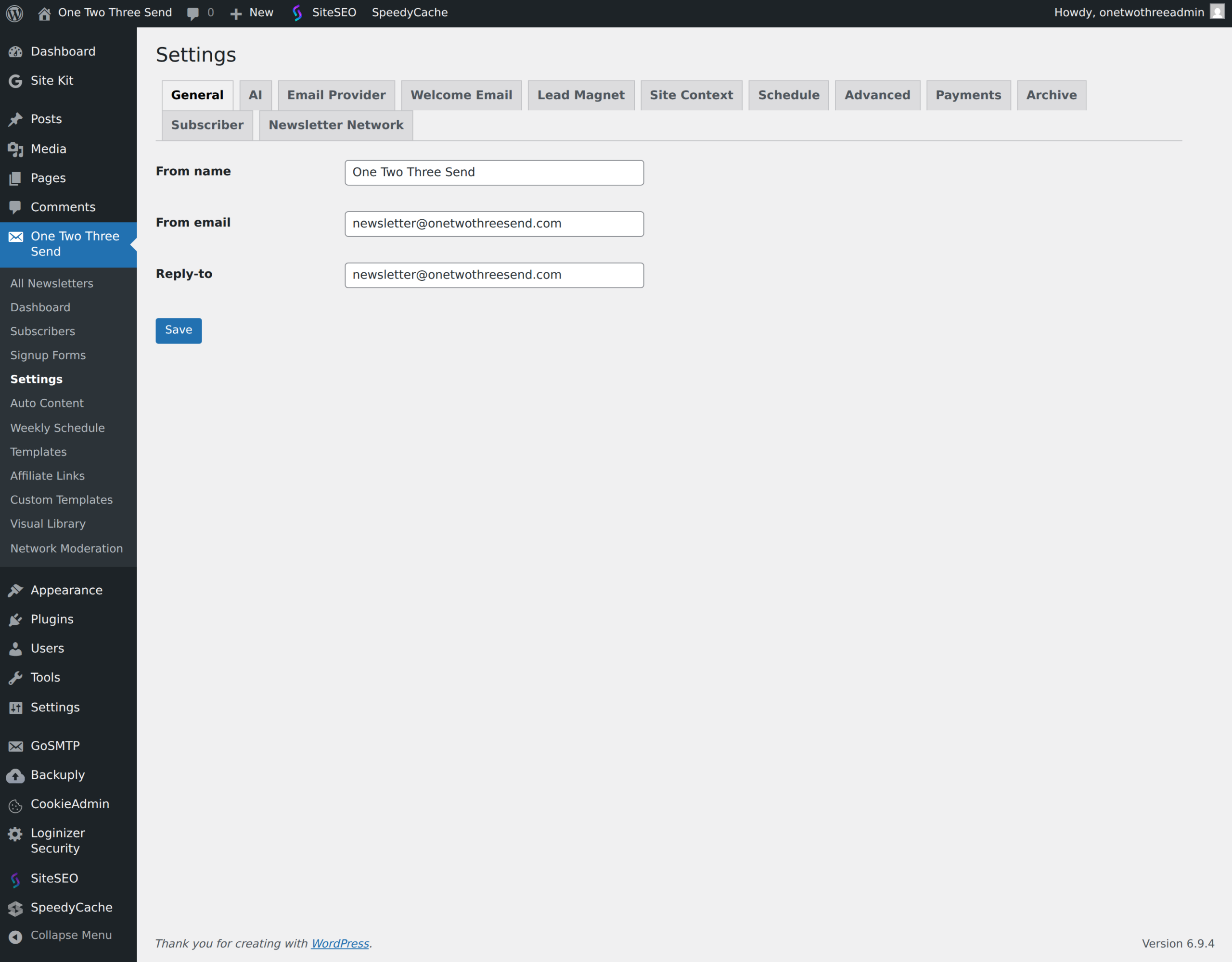
    It’s your reply-to address. And if it’s set to [email protected] or something equally unwelcoming, you’re sending a message louder than anything in your carefully crafted copy: Don’t talk to me.

    The signal you’re actually sending

    When someone replies to your newsletter, they’re doing something valuable. They’re engaged enough to open a compose window, type out thoughts, and hit send. That’s rare behavior. Less than 0.5% of subscribers ever reply to a typical newsletter.

    But when that reply bounces back with an automated “this mailbox is not monitored” message—or worse, fails silently—you’ve just punished your most engaged readers. You’ve told them that despite asking for their attention every week, you’re not interested in a two-way conversation.

    The excuse is usually operational: “We can’t handle the volume” or “We don’t have resources to monitor replies.” But here’s the thing—if you’re getting enough replies that it’s genuinely unmanageable, that’s a signal your content is working. And if you’re not getting many replies? Then a noreply address is solving a problem you don’t have.

    What actually happens when you open replies

    Most newsletter operators imagine a flood. In reality, when you switch from noreply to a monitored address, you’ll typically see:

    • A small uptick in replies—usually 5-15 per week for every 10,000 subscribers
    • Roughly half will be genuine engagement: questions, stories, feedback
    • A quarter will be unsubscribe requests (people who couldn’t find the link)
    • The rest will be out-of-office replies and the occasional spam

    That’s manageable. Even at 50,000 subscribers, you’re looking at maybe 30-75 replies per week. That’s 10 minutes a day, maximum, even if you respond to every single one.

    And you don’t have to respond to every one. A simple filter can catch out-of-office replies. Unsubscribe requests take five seconds. What’s left are the messages from people who actually care—the ones who’ll become paid subscribers, who’ll share your work, who’ll tell you what’s resonating.

    The technical bit that matters

    Your reply-to address doesn’t need to be the same as your from address. In fact, it often shouldn’t be.

    If you’re sending from [email protected] via your ESP’s infrastructure, you can set the reply-to to your actual work email—the one you check. Most platforms make this a single field in your sender settings.

    What matters: make it an address you actually monitor. Not a shared inbox that becomes a graveyard. Not an alias that forwards into a folder you never check. An actual mailbox where replies become part of your workflow.

    If you’re genuinely worried about volume, set up a dedicated address like [email protected] and commit to checking it twice a week. Put it in your calendar. Treat it like the editorial feedback mechanism it actually is.

    Why this matters more than you think

    Email is already swimming against a tide of automation, AI-generated content, and parasocial one-way broadcasts. The newsletters that cut through aren’t necessarily the ones with the best design or the cleverest subject lines. They’re the ones that feel like they come from an actual human who might—possibly—care what you think.

    A reply-to address that works is a tiny signal. But tiny signals compound. They’re the difference between a newsletter that feels like a person and one that feels like a marketing channel.

    And occasionally, someone will reply with exactly the insight you needed for next week’s issue. Or they’ll point out an error before 10,000 other people see it. Or they’ll just say thanks, and you’ll remember why you started this thing in the first place.

    Check your reply-to settings this week. If it’s set to noreply or an unmonitored address, change it. See what happens. If you want to talk about what you find—or if this article rang true—hit reply. We actually read them.

  • Your newsletter doesn’t need a content calendar. It needs a decision tree.

    Your newsletter doesn’t need a content calendar. It needs a decision tree.

    You’ve seen the advice everywhere: plan your newsletter content weeks in advance. Build a content calendar. Map out themes. Schedule everything.

    And if you’re like most newsletter operators, you’ve tried it. You spent an afternoon color-coding a spreadsheet, blocking out topics for the next six weeks, feeling incredibly organized.

    Then Monday arrived. The topic you’d planned felt stale. A better idea surfaced. Your carefully constructed calendar became just another thing to ignore.

    The problem isn’t your discipline. It’s that content calendars optimize for the wrong thing.

    What calendars actually optimize for

    Traditional content calendars are built around scheduling certainty. They answer “what am I sending on Thursday?” brilliantly. They give you the comfort of a plan, the appearance of strategy.

    But they don’t answer the questions that actually matter when you sit down to write:

    • Is this the right thing to say right now?
    • Does this serve my readers better than the other idea I had?
    • Am I writing this because it’s planned, or because it’s necessary?

    Worse, they create artificial pressure. You feel obligated to publish the planned piece even when something more timely, more urgent, more true is sitting right there. The calendar becomes a constraint, not a tool.

    Decision trees over deadlines

    Instead of planning what you’ll write, build a framework for deciding what deserves to be written. Think of it as a decision tree rather than a calendar—a set of criteria that helps you evaluate ideas in real time.

    Here’s what that might look like:

    Start with urgency. Is there something your readers need to know now? A platform change, a seasonal deadline, a common mistake you’re seeing repeatedly this week? Timely topics almost always outperform evergreen ones because they carry inherent urgency. If you’ve got something genuinely time-sensitive, that’s your topic.

    Then check for pattern recognition. Have you had the same conversation three times this week? Answered the same question from multiple subscribers? Noticed the same confusion cropping up? When you spot a pattern, you’ve found a topic that’s already proven itself relevant.

    Default to reader questions. Keep a running list—a note on your phone, a label in your inbox, whatever works—of questions subscribers actually ask. When nothing urgent surfaces and no patterns emerge, pull from this list. You’re solving a real problem for at least one person, which is infinitely better than inventing problems to solve.

    Only then consider your backlog. Those evergreen ideas you’ve been collecting? They’re your fallback, not your foundation. They’re what you write when nothing more pressing exists. And that’s fine—some of your best work will come from this category. Just don’t let the backlog dictate your schedule.

    What to actually plan

    This doesn’t mean you plan nothing. But instead of planning content, plan the infrastructure that makes good decisions easier.

    Block writing time, not topics. Protect Tuesday morning for writing, but don’t commit to what you’re writing until Monday night. Give yourself decision space.

    Build idea capture systems. You need somewhere frictionless to dump thoughts, questions, observations. The decision tree only works if you’re feeding it good inputs.

    Set standards, not schedules. Decide how often you send, what length you aim for, what quality bar you’re holding. Then trust yourself to meet those standards with whatever topic best serves readers this week.

    Create fallback frameworks. Have a few reliable formats you can deploy when you’re stuck: subscriber Q&A, case study breakdowns, contrarian takes on common advice. These aren’t planned in advance, but they’re ready when needed.

    When rigidity actually helps

    There’s one scenario where traditional calendars shine: publications with multiple writers, external contributors, or sponsorship commitments. If you’re coordinating with other people or honouring commercial obligations, you need the structure.

    But even then, build in flexibility. Reserve slots for reactive content. Keep buffer topics ready. Don’t let the calendar eliminate your ability to respond to what’s actually happening.

    If this approach feels uncomfortably unstructured, that’s the point. The discomfort comes from trading false certainty for real responsiveness. Most newsletter operators don’t have a planning problem—they have a deciding problem. And you can’t solve a deciding problem with a calendar.

    Subscribe to One Two Three Send for more operator-to-operator thinking on running newsletters that people actually want to read.